Article Plan: Bartending Terminology PDF
This comprehensive guide details essential bartending terms, tools, and techniques, offering a downloadable PDF resource for aspiring and current bartenders seeking knowledge and skill enhancement.
Bartending terminology is a specialized language crucial for effective communication and professional execution behind the bar. A solid grasp of these terms ensures seamless service, accurate order taking, and consistent cocktail creation. From understanding spirit classifications – whiskey, vodka, gin, rum, tequila – to recognizing essential tools like shakers, strainers, and jiggers, a dedicated vocabulary is paramount.
This PDF serves as a foundational resource, bridging the gap between novice and proficient bartender. It’s designed to demystify the industry’s lexicon, empowering individuals to confidently navigate the dynamic world of mixology and provide exceptional guest experiences. Mastering these terms is the first step towards a fulfilling bartending career.
Why a Bartending Terminology PDF is Useful
A bartending terminology PDF offers unparalleled convenience and accessibility for learning and referencing essential industry terms. It’s a portable, readily available resource for both aspiring bartenders and seasoned professionals seeking a quick refresher. Unlike relying on memory or searching online, a PDF provides a consolidated, offline knowledge base.
This format is invaluable during training, on the job, or while preparing for certification. It supports efficient learning and minimizes errors in communication and drink preparation. Furthermore, a well-structured PDF can serve as a cheat sheet, boosting confidence and enhancing service speed, ultimately leading to increased earnings.
Core Bartending Tools & Their Terms
Mastering bartending necessitates familiarity with essential tools and their specific terminology. Key implements include shakers (Boston, Cobbler), used for chilling and diluting drinks; strainers (Hawthorn, Julep) to remove ice; and jiggers for precise measurement – often in ounces and milliliters.
Bar spoons, with their twisted handles, aid in stirring and layering. Understanding these tools – their names, functions, and proper usage – is fundamental. Proficiency with these tools ensures consistency, efficiency, and professional presentation, elevating the overall cocktail experience for patrons.
Shakers: Types and Terminology
Bartending shakers are crucial for chilling, diluting, and combining ingredients. The Boston shaker consists of two metal tins, requiring a separate strainer. A Cobbler shaker is a three-piece unit – tin, lid with built-in strainer, and cap. French shakers, also known as Parisian shakers, have two metal pieces joined by a spring.
“Dry shaking” refers to shaking without ice, creating a frothy texture. “Wet shaking” involves ice, chilling and diluting the drink. Understanding these terms and the nuances of each shaker type is vital for crafting perfectly balanced cocktails.
Strainers: Hawthorn, Julep, and Fine Mesh
Strainers are essential for separating ice and solids from finished cocktails. A Hawthorn strainer, the most common type, has a coiled spring and fits most shakers. The Julep strainer, a spoon-shaped strainer, is traditionally used with Julep cups and stirred drinks. A Fine mesh strainer, also known as a conical strainer, removes very small particles for a clearer drink.
“Double straining” utilizes both a Hawthorn and fine mesh strainer for exceptionally smooth results. Mastering these tools and techniques ensures a refined cocktail presentation and texture.
Jiggers: Measuring Tools and Sizes
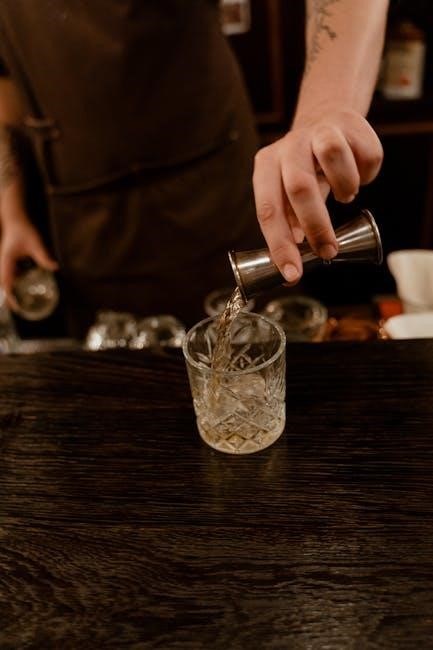
Jiggers are crucial for precise cocktail creation, ensuring balanced flavors. They typically feature two opposing cups, offering different measurements. Common sizes include ¾ oz and 1 ½ oz, but variations exist. “Short pours” and “heavy pours” refer to under or over-measuring, impacting drink consistency.
Understanding jigger markings – ounces, milliliters, and sometimes fractions – is vital. Accurate measurement is a hallmark of professional bartending, guaranteeing repeatable, high-quality cocktails. Consistent use of a jigger is a fundamental skill.
Bar Spoons: Terminology and Usage
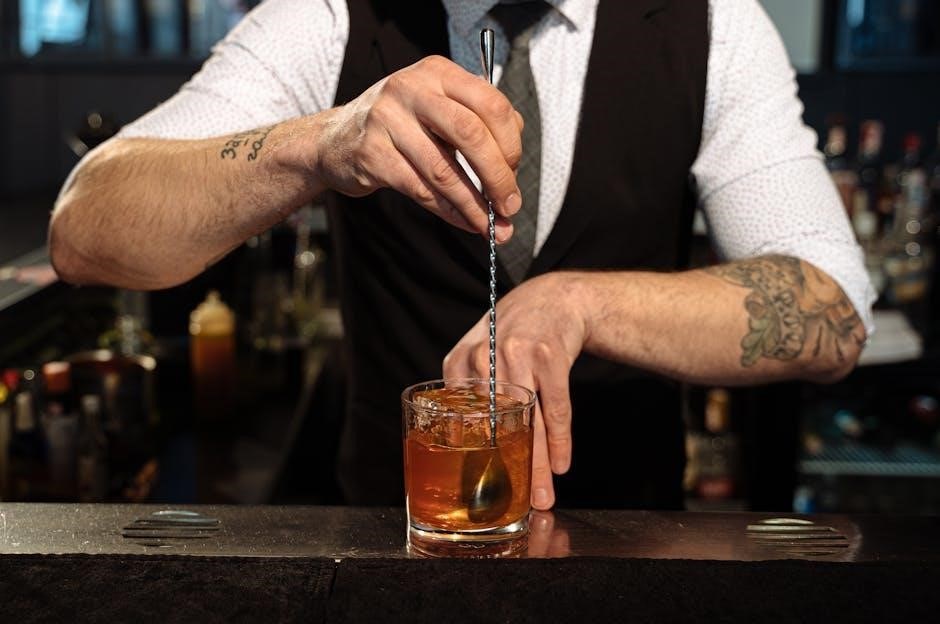
Bar spoons, with their long handles, are essential for stirring cocktails. They feature a twisted handle, aiding grip and layering. “Stirring” with a bar spoon chills and dilutes drinks gently, unlike shaking. The spoon’s design minimizes ice breakage, preserving clarity.
Bartenders use the spoon’s back to layer ingredients, creating visually appealing drinks. Understanding the spoon’s length – typically around 12 inches – is key for reaching the bottom of mixing glasses. Mastering stirring technique is a core bartending skill, impacting texture and taste.
Essential Cocktail Techniques & Terminology
Mastering cocktail techniques is crucial for any bartender. Techniques like “muddling” – gently crushing ingredients to release flavors – are fundamental. “Layering” creates visually stunning drinks by carefully pouring liquids of differing densities. “Dry shaking”, shaking without ice initially, builds a superior foam for cocktails like Whiskey Sours.
“Blending” utilizes a blender for frozen drinks. Understanding when to stir versus shake impacts a cocktail’s texture and clarity. These techniques, combined with precise measurements, elevate drink quality and presentation, showcasing bartending artistry.
Muddling: What it is and when to use it
Muddling is the gentle crushing of ingredients – typically fruits, herbs, and spices – in the bottom of a shaker or mixing glass. This process releases essential oils and flavors, infusing them into the cocktail. It’s vital for drinks like Mojitos (mint), Old Fashioneds (sugar & citrus), and Caipirinhas (lime & sugar).
Avoid over-muddling, which can release bitter compounds from citrus peels or tear delicate herbs. Use a proper muddler with a flat or toothed end, applying firm but controlled pressure. Mastering muddling unlocks a deeper, more complex flavor profile in your cocktails.
Layering: Creating Visually Appealing Drinks
Layering involves carefully pouring ingredients over the back of a spoon, exploiting density differences to create distinct, visually striking layers within a cocktail glass. This technique demands precision and understanding of liquid densities – heavier liquids go on the bottom.
Popular layered drinks include the Rainbow Shot and pousse-café. Success relies on slow, controlled pours and choosing liquids with significant density variations. Layering isn’t just aesthetic; it can also influence the drinking experience, offering different flavor profiles with each sip.
Dry Shaking: Achieving the Perfect Foam
Dry shaking is a technique involving shaking cocktail ingredients without ice, typically before adding ice for a second shake. This is crucial for cocktails containing egg whites, cream, or aquafaba, as it emulsifies these ingredients, creating a luxuriously smooth and stable foam.
The initial dry shake vigorously combines the ingredients, developing the necessary texture. Adding ice afterward chills the drink and further refines the foam. Mastering dry shaking elevates cocktails like Whiskey Sours and Pisco Sours, delivering a velvety mouthfeel and beautiful presentation.
Blending: Using a Blender in Bartending
Blending, utilizing a blender, is a bartending technique for creating frozen cocktails and smoothies; It’s essential for drinks like Margaritas, Daiquiris, and Piña Coladas, achieving a consistent, icy texture. However, over-blending can result in a watery consistency, so careful control is key.
Bartenders must understand blender speeds and ingredient ratios. Adding ingredients in the correct order – typically liquids first – ensures smooth blending. Blenders are also used for crushing ice, creating snow-like textures for specific drinks; Proper cleaning is vital to prevent flavor contamination.
Common Cocktail Ingredients & Their Terms
Understanding cocktail ingredients is fundamental to bartending. Spirits – whiskey, vodka, gin, rum, and tequila – form the base of many drinks, each with unique characteristics. Liqueurs, flavored spirits, add sweetness and complexity, categorized by flavor profiles like fruit, herbal, or nut.
Bitters, concentrated flavorings, provide balance and depth. Mixers, including juices, sodas, and syrups, dilute and complement the spirits. Knowing ingredient terminology – “simple syrup,” “fresh squeezed,” “proof” – is crucial for accurate recipe execution and consistent drink quality.
Spirits: Whiskey, Vodka, Gin, Rum, Tequila
Spirits are the foundation of countless cocktails, each possessing distinct qualities. Whiskey, aged in wood, offers smoky or sweet notes. Vodka, neutral in flavor, serves as a versatile base. Gin, infused with botanicals, provides aromatic complexity. Rum, derived from sugarcane, ranges from light to dark and spiced.
Tequila, from the blue agave plant, delivers earthy and vibrant flavors. Bartenders must understand spirit classifications – Scotch, Bourbon, Rye – and terminology like “proof” and “age statement” for informed drink creation.
Liqueurs: Flavored Spirits and Classifications
Liqueurs add sweetness, flavor, and complexity to cocktails. Created by infusing spirits with fruits, herbs, spices, or nuts, they come in diverse varieties. Classifications include fruit liqueurs (e.g., orange, cherry), herbal liqueurs (e.g., Chartreuse, Benedictine), and nut liqueurs (e.g., Amaretto).
Understanding terms like “crème” (often indicating sweetness, not necessarily cream content) and liqueur ABV is crucial. Bartenders utilize liqueurs to modify spirit profiles and create unique flavor combinations, enhancing the overall cocktail experience.
Bitters: Adding Complexity and Balance
Bitters are concentrated flavorings, vital for cocktail balance. Typically alcohol-based infusions of herbs, spices, roots, and fruits, they aren’t meant for sipping but to enhance other ingredients. Common types include aromatic (Angostura), orange (Regan’s), and Peychaud’s.
Bartenders use bitters to add depth, complexity, and a subtle counterpoint to sweetness. Understanding “dash” measurements (typically 1/8 tsp) is key. Mastering bitters allows for nuanced adjustments, elevating a cocktail from good to exceptional, showcasing a bartender’s skill.
Mixers: Juices, Sodas, and Syrups
Mixers are non-alcoholic components that complement spirits in cocktails. This category encompasses fresh juices (citrus, pineapple, cranberry), carbonated sodas (club soda, ginger ale, cola), and sweetened syrups (simple syrup, grenadine, orgeat).
Quality matters; fresh juice is preferred over bottled. Understanding the sugar content and acidity of each mixer is crucial for balancing flavors. Bartenders often create their own syrups for unique profiles. Proper mixer selection significantly impacts a cocktail’s final taste and overall appeal.
Standard Cocktail Glasses & Terminology
Cocktail glasses are selected based on drink type, influencing presentation and aroma. Common types include highball (tall, for mixed drinks), rocks/old fashioned (short, for spirits on the rocks or stirred cocktails), martini (iconic V-shape, for martinis and similar drinks), and coupe (elegant, for shaken cocktails).
Understanding capacity (measured in ounces) is vital for accurate pours. Glassware terminology extends to chilling techniques and proper garnish placement. Selecting the correct glass enhances the overall cocktail experience and reflects bartending professionalism.
Highball Glasses: Usage and Capacity
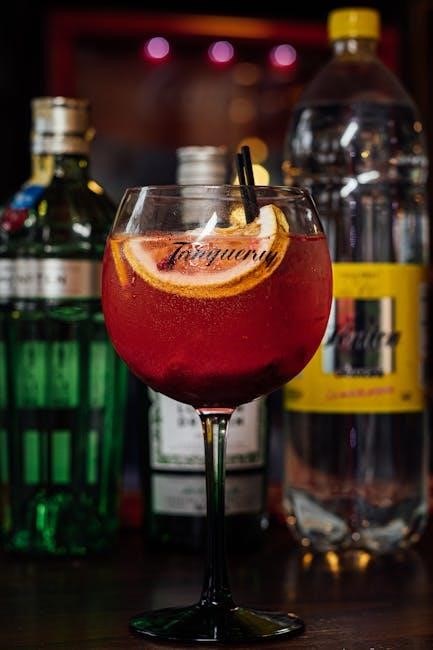
Highball glasses, typically ranging from 8-12 ounces, are ideal for refreshing, longer drinks. These tall, slender glasses accommodate a generous amount of mixer, commonly used for beverages like Gin & Tonics, Rum & Cokes, and Whiskey Highballs.
“Highball” refers to both the glass and the drink itself. Proper usage involves filling the glass with ice, adding the spirit, and topping with a non-alcoholic mixer. Understanding capacity ensures balanced proportions and consistent drink quality, crucial for professional bartending.
Rocks Glasses: Old Fashioned and On the Rocks
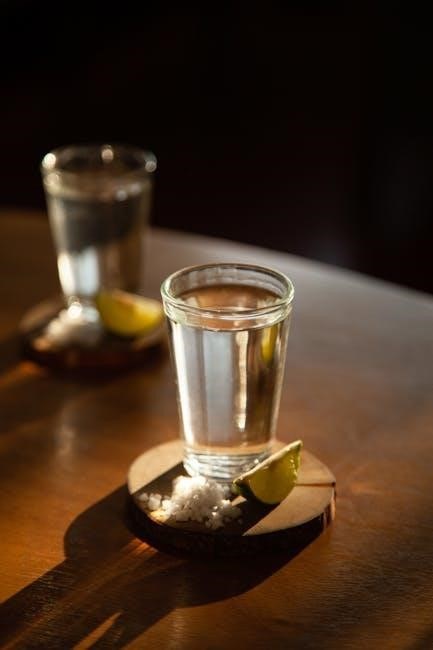
Rocks glasses, also known as Old Fashioned glasses, are short, sturdy vessels typically holding 6-12 ounces. They are fundamental for serving drinks “on the rocks” – meaning served over ice. The wide opening facilitates muddling ingredients directly within the glass, essential for classic cocktails like the Old Fashioned.
The term “on the rocks” specifically denotes a drink served with ice in a rocks glass. These glasses are versatile, suitable for neat pours, or shorter mixed drinks. Mastering their use is vital for any bartender.
Martini Glasses: Classic Cocktail Presentation
Martini glasses are iconic for their conical shape and long stem, typically holding 4-6 ounces. Designed to showcase clear cocktails, they minimize surface area, keeping drinks colder for longer. The stem prevents heat transfer from the hand, preserving the drink’s temperature and presentation.
Traditionally used for Martinis, these glasses are now popular for various cocktails. Understanding proper pouring technique to avoid spills is crucial. A well-presented Martini in its classic glass elevates the drinking experience.
Coupe Glasses: Elegant and Versatile
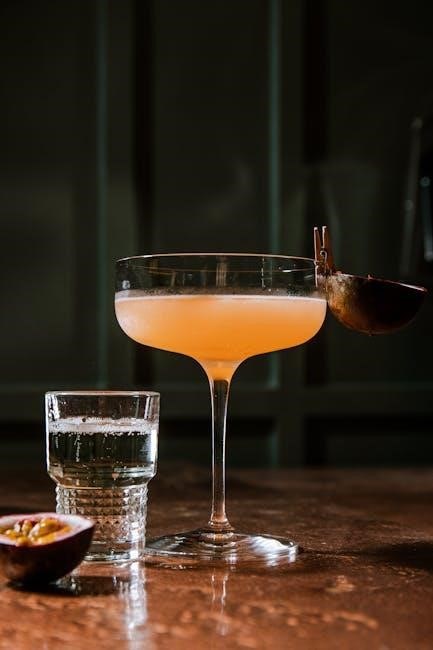
Coupe glasses, with their broad, shallow bowl and elegant stem, offer a sophisticated alternative to Martini glasses. Historically used for Champagne, they’ve gained popularity for stirred cocktails, showcasing clarity and aroma. Holding approximately 6-8 ounces, they provide ample space for complex flavor profiles.
Their rounded shape minimizes ice chipping and prevents rapid dilution. Versatile and visually appealing, coupes enhance the presentation of numerous classic and modern cocktails, adding a touch of timeless elegance to any bar setting.
Bartending Skills & Techniques Terminology
Mastering bartending isn’t just about knowing recipes; it’s about skillful execution. “Free pouring” refers to dispensing spirits without a jigger, demanding precision through practice. “Building” a cocktail involves layering ingredients directly in the glass. Understanding the difference between “stirring” – for clear, spirit-forward drinks – and “shaking” – for incorporating juice or cream – is crucial.
These techniques, alongside proper layering and garnish application, elevate drink quality and presentation. Consistent practice and attention to detail are key to becoming a proficient bartender.
Free Pouring: Accuracy and Practice
“Free pouring” is the art of dispensing measured liquor without a jigger, relying on counting and consistent technique. It demands extensive practice to achieve accuracy, typically starting with water to develop muscle memory. Bartenders learn to associate specific pour counts with standard measurements (e.g., one count equals ¾ ounce).
Consistency is paramount; variations impact drink balance. Mastering free pouring showcases skill and efficiency, but responsible service always prioritizes accurate alcohol quantities.
Building a Cocktail: Layering Ingredients
“Building” a cocktail refers to directly assembling ingredients within the serving glass, typically starting with heavier components like syrups and liqueurs, followed by juices, and finishing with the spirit. This method is common for drinks served “on the rocks” or in highball glasses.
Layering considers density; ingredients with higher sugar content sink, while lighter liquids float. Proper layering enhances visual appeal and allows for a gradual flavor evolution as the drink is consumed. It’s a fundamental technique for many classic cocktails.
Stirring vs. Shaking: When to Use Each Method
Stirring and shaking are crucial cocktail preparation techniques, each impacting texture and temperature. Stirring, using a bar spoon, chills and dilutes drinks with minimal aeration, ideal for spirit-forward cocktails like Martinis and Old Fashioneds, preserving clarity.
Shaking, employing a shaker with ice, vigorously chills, dilutes, and aerates, creating a frothy texture suitable for juice-based cocktails like Margaritas and Daiquiris. Understanding ingredient composition dictates the appropriate method for optimal results and drink presentation.
Legal & Safety Terminology for Bartenders
Bartenders must understand legal and safety protocols, including Responsible Beverage Service (RBS), emphasizing preventing intoxication and its consequences. ID Checking Procedures are vital, requiring verification of age and recognizing fraudulent identification. Terms like “intoxicated”, “minor”, and “refusal of service” are critical;
Knowledge of local alcohol laws, liability concerns, and safe alcohol handling practices is essential. Bartenders are often first responders, needing awareness of emergency procedures and recognizing signs of distress to ensure patron and establishment safety.
Responsible Beverage Service (RBS)
Responsible Beverage Service (RBS) training is crucial, focusing on preventing alcohol-related harm. Key terminology includes “standard drink”, defining alcohol content, and “blood alcohol content (BAC)”, measuring intoxication levels. Understanding “dram shop laws” – holding establishments liable for over-serving – is vital.
RBS emphasizes recognizing signs of intoxication, intervening appropriately, and refusing service to impaired individuals. Bartenders learn techniques for slowing consumption, offering alternatives, and arranging safe transportation. Certification demonstrates commitment to legal and ethical service.
ID Checking Procedures & Terminology
Rigorous ID checking is paramount for legal compliance. Key terms include “valid ID” – government-issued with photo and birthdate – and “age verification”, confirming legal drinking age (21 in the US). Understanding “false ID” indicators – alterations, inconsistencies – is crucial.
Bartenders must consistently request IDs from anyone appearing under age. Scanning for holograms, watermarks, and proper expiration dates are essential. Knowing state-specific ID formats and refusing service to those without valid identification are vital responsibilities.
Resources for a Bartending Terminology PDF
Numerous online platforms offer valuable bartending resources. Websites like Local Bartending School of Marana provide cheat sheets and guides, aiding in terminology mastery. Comprehensive online bartending courses and tutorials are readily available, offering structured learning paths.
For in-depth training, consider enrolling in accredited bartending schools. These programs deliver hands-on experience and certification. Exploring industry blogs and forums can also expand your knowledge base. Utilizing these resources ensures a robust understanding of bartending terminology and best practices.
Online Bartending Guides & Cheat Sheets
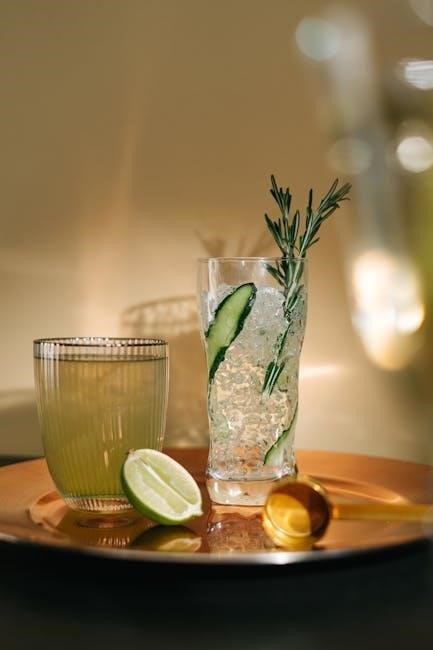
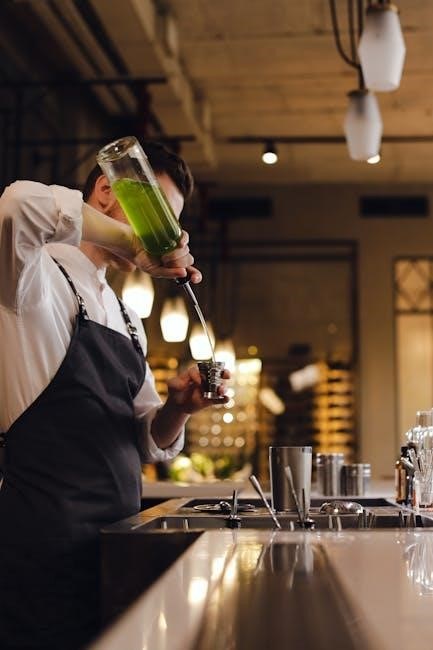
Digital resources are invaluable for quick terminology reference; Websites offer downloadable bartender cheat sheets, covering essential tools, techniques, and common cocktail recipes. These guides simplify complex information, aiding in efficient learning and recall.
Many platforms provide interactive glossaries and terminology quizzes, reinforcing knowledge. Online bartending schools often include digital study materials as part of their courses. Utilizing these readily accessible resources streamlines the learning process, enabling bartenders to confidently navigate the industry’s specialized language.
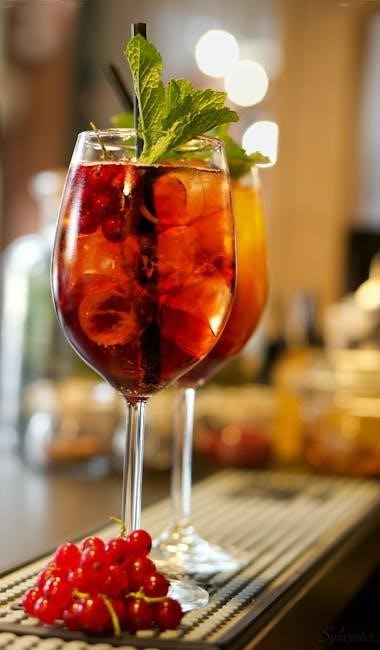
Bartending Schools & Training Programs
Formal bartending education provides a structured approach to mastering terminology. Comprehensive programs, like those offered by Local Bartending School of Marana, dedicate significant time to defining and applying industry-specific language.
These courses often incorporate hands-on practice alongside theoretical learning, solidifying understanding. Instructors provide personalized guidance, ensuring students grasp nuanced terms related to spirits, techniques, and bar operations. Certification upon completion demonstrates proficiency, enhancing career prospects and validating knowledge of essential bartending terminology.
Future Trends in Bartending Terminology
The bartending lexicon is evolving with innovative techniques like molecular mixology. New terms describing spherification, foams, and infusions are gaining prominence, demanding continuous learning for professionals.
The craft cocktail movement fuels a focus on ingredient origins and precise preparation, introducing specialized terminology for artisanal spirits and unique flavor profiles. Staying current requires embracing these emerging terms and understanding their application. A comprehensive PDF resource must adapt to reflect these shifts, ensuring bartenders remain proficient in the ever-changing language of the industry.
Molecular Mixology & New Techniques
Molecular mixology introduces a new layer of terminology, encompassing techniques like spherification – creating liquid-filled spheres – and foams utilizing lecithin or other stabilizers. Understanding terms like “reverse spherification” and “molecular gastronomy” is crucial.
The PDF should define these processes, alongside explanations of infusion methods (sous vide, fat-washing) and clarification techniques. Terms related to specialized equipment – rotary evaporators, sonicators – also require inclusion. A glossary detailing these advanced concepts will empower bartenders to confidently explore and articulate these cutting-edge practices.
Craft Cocktail Movement & Ingredient Focus
The craft cocktail movement emphasizes fresh, high-quality ingredients, demanding precise terminology. The PDF must detail terms for various bitters – aromatic, orange, Peychaud’s – and specific sugar types like demerara or turbinado.
Understanding “shrubs” (fruit-infused vinegar syrups) and homemade infusions is vital. Detailed definitions of different citrus expressions – oleo saccharum, citrus oils – are essential. The document should also cover terminology related to sourcing ingredients, like “single-origin” spirits and “seasonal produce,” reflecting the movement’s dedication to quality and provenance;